
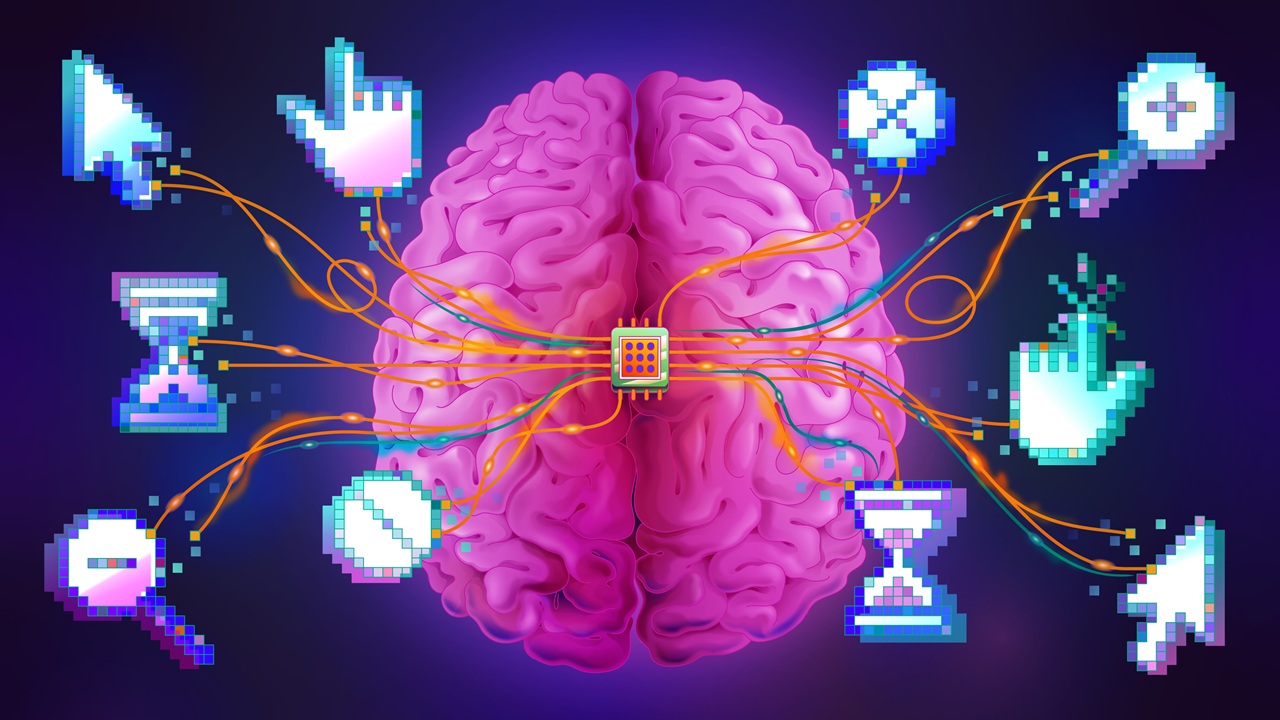
A few years ago, the idea of controlling a computer with your thoughts sounded like pure science fiction. Today, it is becoming reality. Brain computer interfaces, often called BCIs, are being developed at a rapid pace, with companies like Neuralink leading the charge. These technologies promise incredible benefits, from helping paralyzed individuals regain movement to enabling faster communication than ever before.
But alongside this excitement, there is a growing sense of unease. When technology connects directly to the human brain, it raises questions that go far beyond convenience or productivity. What happens to privacy when your thoughts can be recorded or interpreted? Who owns your brain data? And more importantly, could such systems ever be misused for manipulation or control?
This is not about fearmongering. It is about understanding the full picture. Every powerful technology comes with risks, and brain computer interfaces may be one of the most powerful tools humanity has ever created.
What Are Brain Computer Interfaces and Why They Matter
Brain computer interfaces are systems that allow direct communication between the brain and an external device. Instead of using a keyboard, mouse, or touchscreen, users can send signals using neural activity.
In simple terms, your brain becomes the controller.
Neuralink, founded by Elon Musk, is one of the most well known companies working in this field. Their goal is to implant tiny devices into the brain that can read and potentially write neural signals. Early demonstrations have shown animals controlling devices with their minds, and human trials are already underway.
The potential benefits are remarkable:
People with paralysis could move robotic limbs
Patients with neurological disorders could regain lost abilities
Communication could become faster and more intuitive
It sounds like a breakthrough that could change lives. And it likely will. But that is only one side of the story.
The Hidden Cost of Convenience
When new technologies emerge, society often focuses on what they can do, not what they might take away. With BCIs, the biggest concern is not the hardware itself. It is the data.
Your brain generates the most personal data imaginable. It reflects your thoughts, emotions, intentions, and even subconscious reactions. If a device can read that data, it means something else can store it, analyze it, and potentially exploit it.
Think about how much data your smartphone already collects. Now imagine a device that has access to your inner thoughts instead of just your search history.
That is where the real concern begins.
Privacy Risks: When Thoughts Are No Longer Private
Privacy has already become a major issue in the digital age. Social media platforms track behavior, apps collect usage data, and companies build detailed profiles of users. Brain computer interfaces could take this to an entirely new level.
If neural data is stored or transmitted, it becomes vulnerable to the same risks as any other digital information:
Data breaches could expose deeply personal mental patterns
Companies could analyze thoughts for targeted advertising
Governments could potentially access neural data for surveillance
Even if companies promise strong encryption and security, no system is completely immune to hacking. History has shown that where data exists, breaches eventually follow.
There is also the issue of consent. Most people do not fully understand how their data is used today. With BCIs, the complexity increases dramatically. Can users truly give informed consent when the technology itself is still evolving?
Neuralink and the Question of Trust
Neuralink has positioned itself as a company focused on helping humanity. Its stated mission includes solving neurological disorders and eventually enhancing human capabilities.
But trust is a fragile thing, especially when dealing with something as sensitive as the human brain.
Users would need to trust that:
Their data is not being misused
The device cannot be accessed without permission
Updates or changes do not alter brain function in harmful ways
Even if Neuralink operates ethically, what happens if similar technologies are developed by less responsible organizations? Technology tends to spread, and once it does, control becomes much harder.
The concern is not just about one company. It is about the entire ecosystem that could emerge around brain connected devices.
The Fear of Mind Control: Science Fiction or Real Risk
The phrase mind control often brings to mind movies and conspiracy theories. But when discussing BCIs, it is worth examining what this idea actually means.
Current technology mainly focuses on reading brain signals. However, research is also exploring ways to stimulate the brain to influence activity. This is already used in medical treatments such as deep brain stimulation for conditions like Parkinson disease.
If a device can both read and write neural signals, it opens the door to more complex interactions.
Could someone influence your decisions?
Could emotions be altered externally?
Could behavior be nudged without your awareness?
These questions may sound extreme, but they are not entirely unrealistic. Even today, algorithms on social media influence opinions and behavior without directly interacting with the brain. BCIs could amplify that influence significantly.
The real danger may not be total control, but subtle manipulation.
Security Threats: Hacking the Human Mind
Cybersecurity experts have long warned that any connected device can be a potential target. Brain implants would not be an exception.
Imagine a scenario where a malicious actor gains access to a neural device. The consequences could go far beyond stolen data:
Unauthorized signals could disrupt brain function
Sensitive information could be extracted
Users could lose control over connected systems
While this might sound like a distant possibility, it follows the same pattern seen with other technologies. Cars, smartphones, and even medical devices have all been hacked at some point.
The difference is that this time, the target is not just a device. It is the human brain.
Ethical Concerns: Who Owns Your Thoughts
One of the most complex issues surrounding BCIs is ownership. When your brain data is recorded, who does it belong to?
Is it the user
The company that created the device
The platform that processes the data
Without clear regulations, this question becomes a legal and ethical gray area. Companies may claim rights to data for improving their services, while users may assume full ownership of their mental activity.
There is also the issue of inequality. Advanced brain technologies may initially be available only to those who can afford them. This could create a divide where some individuals have enhanced cognitive abilities while others do not.
Over time, this could reshape society in ways we are only beginning to understand.
The Role of Governments and Regulation
As with any powerful technology, regulation will play a critical role in shaping how BCIs are used.
Governments will need to address several key areas:
Data protection laws specific to neural information
Safety standards for implants and devices
Limits on how brain data can be used or shared
The challenge is that technology often evolves faster than regulation. By the time laws are established, the technology may already be widespread.
International cooperation will also be important. Brain data does not respect borders, and companies often operate globally. Without consistent standards, loopholes could emerge.
A Human Perspective: Why This Feels Different
Every major technological shift has faced resistance. People were once skeptical of the internet, smartphones, and even electricity. Many of those concerns eventually faded as society adapted.
But brain computer interfaces feel different for a simple reason. They blur the line between human and machine.
Your thoughts are deeply personal. They shape your identity, your decisions, and your sense of self. The idea of sharing that space with a device is both fascinating and unsettling.
It is not just about technology. It is about what it means to be human in a world where machines can interact directly with the mind.
Balancing Innovation and Caution
It would be a mistake to view BCIs only through a negative lens. The potential benefits are too significant to ignore. For many people, especially those with severe medical conditions, these technologies could be life changing.
At the same time, ignoring the risks would be equally dangerous.
The goal should not be to stop innovation, but to guide it responsibly. This includes:
Transparent communication from companies
Strong security measures from the start
Clear legal frameworks that protect users
Public awareness will also play a key role. The more people understand these technologies, the better equipped they will be to make informed decisions.
The Future: What Comes Next
Brain computer interfaces are still in their early stages, but progress is accelerating. In the coming years, we are likely to see:
More human trials and medical applications
Improved accuracy in reading neural signals
Early forms of consumer level devices
As this happens, the conversation around risks will become even more important. Decisions made today will shape how this technology is used for decades to come.
Will BCIs empower individuals or create new forms of control
Will they enhance privacy or erode it further
The answers depend on how society chooses to approach these questions.
Conclusion
Brain computer interfaces represent one of the most exciting and controversial developments in modern technology. They offer the possibility of transforming lives, solving complex medical challenges, and redefining human interaction with machines.
But they also come with serious risks that cannot be ignored.
Privacy concerns, security threats, ethical dilemmas, and the potential for manipulation all highlight the need for careful consideration. This is not just another gadget or app. It is a technology that interacts with the very core of who we are.
As we move forward, the challenge will be finding the right balance. Innovation should continue, but not at the cost of fundamental human rights.
Because once technology enters the mind, there is no simple way to turn it off.

Artificial intelligence has quickly moved from being a futuristic concept to something we interact with every day. It recommends what Read more

A few years ago, artificial intelligence felt like something happening in the background. It powered recommendations, filtered spam, and helped Read more

For years, quantum computing felt like something locked behind laboratory doors, discussed in research papers and theoretical debates rather than Read more

Walk into any modern home, office, or even a small café in 2026, and you will notice something quietly powerful Read more

At AutoTechXpert.in, we're passionate about all things automotive—from the latest car launches and cutting-edge EV tech to in-depth reviews and performance insights. Our editorial team is made up of seasoned auto journalists, tech enthusiasts, and driving purists who live and breathe the road. With years of industry experience, we break down complex car jargon into real, relatable advice to help you make smarter automotive decisions.