
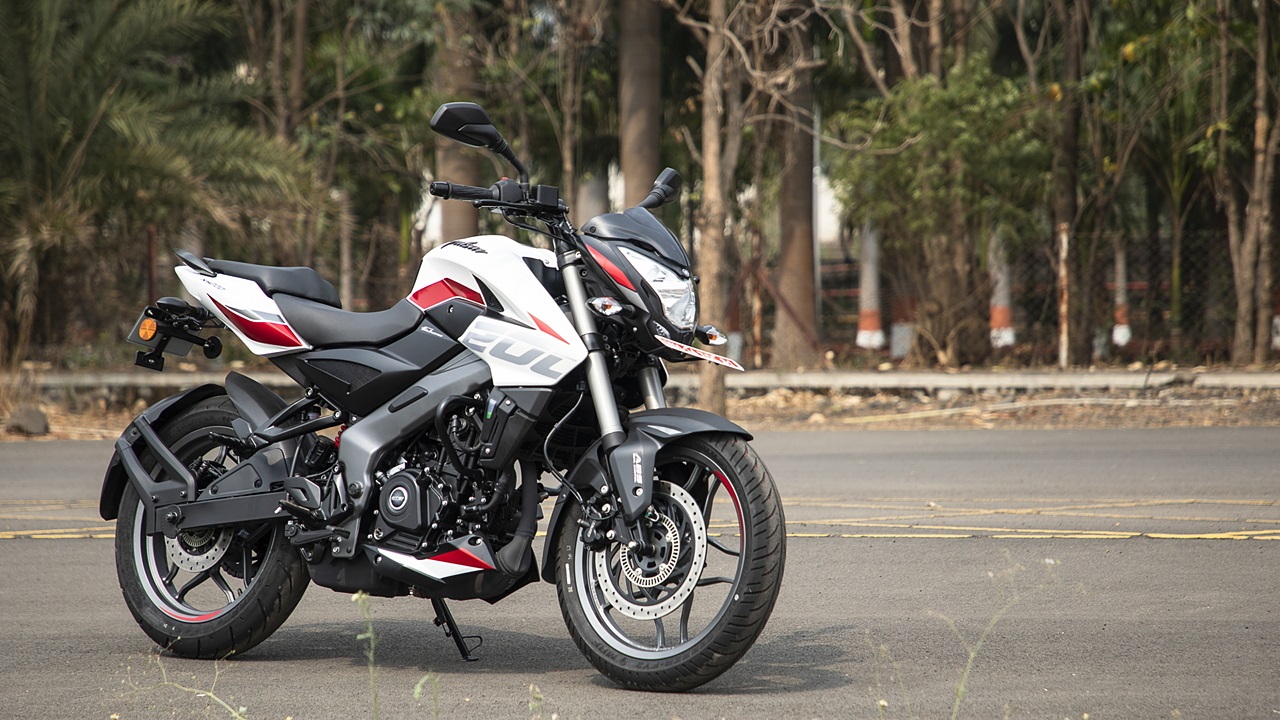
Bajaj is once again making headlines, this time with a new lower-spec variant of the popular Pulsar NS200, which has been spotted testing on public roads. The test mule was seen without camouflage, giving a clear look at what appears to be a more affordable version of the streetfighter.
This move could make the NS200 more accessible to a wider audience, especially for riders looking for performance on a budget.
What’s Different in the Spotted Variant?
The most noticeable change in the test bike is the absence of USD (upside-down) front forks, which are currently offered on the existing model. Instead, it was seen with conventional telescopic forks, likely to reduce production costs.
Additionally, the bike did not seem to have dual-channel ABS. If that’s confirmed, it could be equipped with single-channel ABS, which would bring it in line with entry-level sports bikes in the market.
Other parts like the frame, body panels, fuel tank, and exhaust look identical to the current NS200, suggesting that Bajaj wants to retain the core design while making strategic changes to reduce cost.
Why a Lower-Spec NS200 Makes Sense
The Pulsar NS200 is already a strong performer in its segment, known for its sharp handling, aggressive styling, and peppy engine. However, it currently sits at a price point that may be slightly out of reach for budget-conscious buyers.
By introducing a stripped-down variant, Bajaj can offer the NS200 experience at a more competitive price, attracting students, first-time buyers, and those upgrading from commuter bikes.
With rising production costs and price-sensitive consumers, this could be a smart move to maintain Pulsar’s popularity across different budget brackets.
What About the Engine?
From what’s visible, the test bike seems to carry over the same 199.5cc liquid-cooled engine that powers the current NS200. It produces 24.1 bhp and 18.7 Nm of torque, paired with a 6-speed gearbox. There’s no sign that Bajaj is planning to change the powertrain, which means performance should remain the same even in this lower-spec version.
That could make it one of the few bikes offering strong performance at a more accessible price point.
Expected Launch Timeline
Although Bajaj has not made an official announcement, the bike seems fairly close to production. A launch in the coming months is highly likely, possibly around mid-2024.
Once launched, this new variant could sit just below the standard NS200 in the lineup, offering buyers the same Pulsar DNA with fewer features and a lighter price tag.
What’s Different This Time?
From the pics floating around, this lower-spec NS200 swaps out the upside-down forks for a conventional telescopic fork. It’s a bit of a throwback, sure, but it’s a smart move to keep costs down. Another big change? It’s got single-channel ABS instead of the dual-channel system on the higher-end model. For someone like me, who’s ridden both setups, it’s not a dealbreaker; single-channel still gets the job done, especially for city rides or quick weekend blasts.
The engine, though, seems to be the same 199cc liquid-cooled beast we all know, pumping out around 24 bhp and 18.74 Nm of torque. That’s plenty of grunt for zipping through traffic or carving up a twisty road. No word yet on whether they’ve tweaked the tuning, but I’d bet it still feels as lively as ever. The six-speed gearbox is likely sticking around too, keeping that smooth, responsive ride intact.
Why Go Lower-Spec?
Here’s where it gets interesting. Bajaj’s already got a stacked Pulsar lineup, from the zippy N125 to the beefy NS400. So why roll out a stripped-down NS200? My guess is they’re aiming to hook a wider crowd. Not everyone needs the bells and whistles of USD forks or dual-channel ABS, especially younger riders or folks on a budget. At Rs 1.59 lakh (ex-showroom) for the current NS200, a lower-spec version could shave off a decent chunk of that price, making it a steal for what you’re getting.
I can already picture it: a college kid saving up for their first big bike, or someone like my buddy who just wants a reliable ride without the extra frills. Bajaj’s done this before with models like the Pulsar 150, offering variants to fit different wallets. It’s a clever play, and if they nail the pricing, this could be a hit.
What We’re Seeing
The bike’s design doesn’t stray far from the NS200’s streetfighter roots. It’s still got that muscular tank and sharp lines that make it look ready to pounce. The camo on the test mule hides some details, but I’d wager it keeps the LED headlamp and that aggressive stance. Maybe they’ll toss in a new color or two to freshen things up; I’d love to see a matte black option roll out.
One thing’s for sure: this isn’t about reinventing the wheel. It’s about taking a proven winner and making it more accessible. The NS200’s always been a balance of performance and practicality, and this variant seems to lean harder into the latter without losing its edge.
When’s It Coming?
No official launch date yet, but seeing it at a dealership hints it’s close. Bajaj loves a good festive season drop, so I wouldn’t be surprised if we hear more soon, maybe around Diwali when buyers are itching to splurge. Pricing’s the big question mark. If they can land it under Rs 1.4 lakh, it’ll be tough for rivals like the TVS Apache RTR 200 or Honda Hornet 2.0 to keep up.
My Two Cents
I’ve got a soft spot for the NS200, and this lower-spec version feels like Bajaj’s way of sharing the love. It’s not about diluting the brand; it’s about opening the door to more riders who want that Pulsar thrill. Sure, it’s not the flashiest update, but it doesn’t need to be. If it delivers the same punch at a friendlier price, I’m all in.
What do you think? Are you hyped for a budget-friendly NS200, or do you reckon the full-spec version’s worth the extra cash? I’d love to hear your take, because this one’s got me itching to hit the road and find out for myself!

You’re a motorcycle nut like me, always on the lookout for the next ride that’s going to make your heart Read more

Few motorcycles in India have a legacy as strong as the Royal Enfield Classic 350. It is more than just Read more

KTM is once again shaking things up in the Indian motorcycle space. The upcoming KTM 390 SMC R has been Read more

The Hero Splendor Plus, one of India’s most trusted commuter motorcycles, has been spotted testing, hinting at a possible update Read more

At AutoTechXpert.in, we're passionate about all things automotive—from the latest car launches and cutting-edge EV tech to in-depth reviews and performance insights. Our editorial team is made up of seasoned auto journalists, tech enthusiasts, and driving purists who live and breathe the road. With years of industry experience, we break down complex car jargon into real, relatable advice to help you make smarter automotive decisions.