
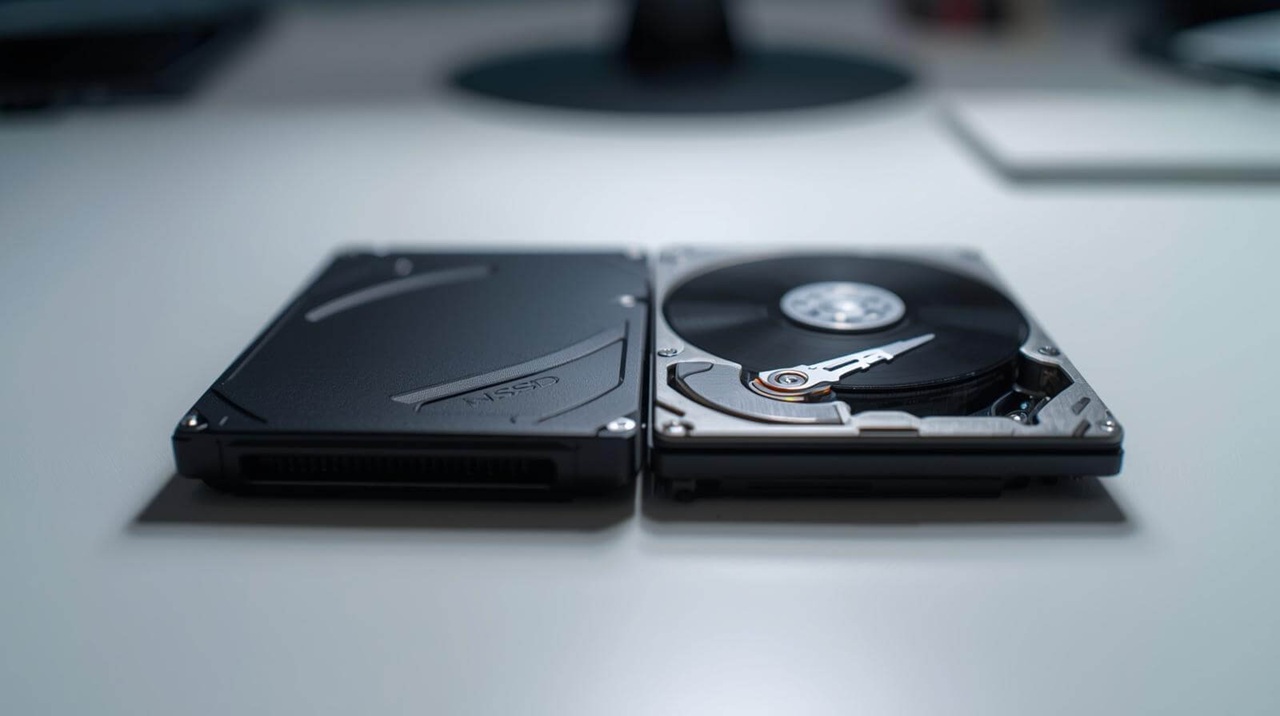
If you have upgraded a laptop or built a PC anytime in the last few years, you have probably noticed something: traditional hard drives are quietly disappearing. Once the backbone of every computer, HDDs are now being replaced almost everywhere by solid state drives, better known as SSDs.
This shift did not happen overnight. It has been a gradual but decisive transition driven by speed, reliability, and changing user expectations. Today, SSDs are no longer a luxury component. They are the default.
Let’s break down what is really happening, why SSDs are taking over, and whether hard drives still have a place in 2026 and beyond.
The Basics: HDD vs SSD in Simple Terms

Before diving deeper, it helps to understand how these two storage types actually work.
A traditional hard disk drive uses spinning metal platters and a moving read write head. Data is stored magnetically, and the system physically moves to read or write information. That mechanical process is the reason HDDs are slower and more fragile.
An SSD, on the other hand, has no moving parts. It uses flash memory, similar to what you find in your smartphone. Data is accessed electronically, which makes everything faster and more efficient.
That one difference, moving parts versus no moving parts, is the root of everything that follows.
Speed Changed Everything
The biggest reason SSDs are killing HDDs is simple: speed.
If you have ever switched from an HDD to an SSD, you already know the feeling. A system that used to take a minute to boot suddenly starts in seconds. Apps open instantly. File transfers no longer feel like a waiting game.
A typical HDD offers speeds around 80 to 160 MB per second. A standard SATA SSD jumps to about 500 MB per second. But modern NVMe SSDs go even further, reaching 3000 to 7000 MB per second and beyond.
That is not just an upgrade. It is a complete transformation in how a computer feels to use.
For everyday users, this means less waiting. For professionals, it means real productivity gains. Video editors, developers, and gamers all benefit from faster storage.
Once people experience that level of speed, going back to a hard drive feels almost impossible.
Reliability and Durability Matter More Than Ever
Hard drives are mechanical devices. That means they can fail due to wear and tear, physical shocks, or even simple aging.
Drop a laptop with an HDD, and there is a real chance of data loss. Even normal usage over time can cause parts to degrade.
SSDs remove that risk. With no moving parts, they are much more resistant to physical damage. They also generate less heat and operate silently.
This is especially important in today’s world, where people carry their devices everywhere. Laptops, ultrabooks, and even handheld gaming PCs demand durable components.
While SSDs do have a limited number of write cycles, modern drives are designed to last for years under typical use. For most users, the lifespan of an SSD easily exceeds the life of the device itself.
Power Efficiency and Battery Life
Another reason SSDs are replacing HDDs is power efficiency.
Hard drives require energy to spin their platters and move their read heads. This constant mechanical activity consumes more power.
SSDs, by contrast, use less energy because they access data electronically. This leads to longer battery life in laptops and lower power consumption in desktops.
In a world where portability matters more than ever, this advantage cannot be ignored. Even a small improvement in battery life can make a noticeable difference in daily use.
Form Factor and Design Flexibility
Modern devices are getting thinner, lighter, and more compact. HDDs, with their spinning disks and physical constraints, limit how small a device can be.
SSDs are much more flexible. They come in slim 2.5 inch formats, tiny M.2 sticks, and even soldered chips directly on motherboards.
This flexibility allows manufacturers to design ultra thin laptops, mini PCs, and compact gaming systems without sacrificing storage performance.
Take a look at any modern ultrabook or high end laptop. You will not find a traditional hard drive inside. It is simply too bulky for today’s designs.
Falling Prices Changed the Game
For years, the biggest advantage of HDDs was cost. You could get massive storage for a very low price, while SSDs were expensive and limited in capacity.
That gap has narrowed significantly.
SSDs are now far more affordable than they used to be. While they still cost more per gigabyte than HDDs, the difference is no longer a deal breaker for most users.
You can now buy 1TB SSDs at prices that were unthinkable a few years ago. Even budget laptops now ship with SSDs as standard.
As production scales and technology improves, prices continue to drop. This makes SSDs accessible to a wider audience, accelerating the decline of HDDs.
The Role of SSDs in Gaming and Creative Work
Gaming is one area where SSDs have completely changed expectations.
Modern games are built with fast storage in mind. Features like instant loading, open world streaming, and quick resume depend on SSD speeds. Consoles like the PlayStation 5 and Xbox Series X have set a new standard, and PC gaming is following closely.
If you try to run newer games on an HDD, you may face long load times, texture pop in, and overall poor performance.
For content creators, the benefits are just as clear. Editing 4K or even 8K video requires fast read and write speeds. SSDs make it possible to handle large files smoothly without constant delays.
In both cases, SSDs are not just better. They are becoming essential.
Are HDDs Completely Dead?
Not quite. While SSDs are dominating consumer devices, hard drives still have a role to play.
HDDs are still widely used for mass storage. Data centers, backup systems, and archival storage rely on them because they offer large capacities at a lower cost.
If you need to store terabytes of data that you do not access frequently, an HDD can still make sense.
Many desktop users also combine both technologies. An SSD for the operating system and frequently used apps, and an HDD for storing large files like movies, photos, or backups.
However, even in these scenarios, SSDs are slowly gaining ground as prices continue to fall.
The Transition Is Already Happening
What is interesting about this shift is that it is no longer a future prediction. It is already happening.
Most new laptops come with SSDs by default. Many modern desktops do the same. Even budget systems are moving away from HDDs.
Software is also evolving to take advantage of faster storage. Operating systems, games, and applications are designed with SSD performance in mind.
This creates a cycle. As more software expects SSD speeds, HDDs become less practical, pushing more users to upgrade.
What This Means for You
If you are still using a hard drive as your main storage, upgrading to an SSD is one of the most noticeable improvements you can make.
It does not require a new computer. In many cases, simply replacing your HDD with an SSD can make your system feel completely different.
Boot times, app launches, file transfers, everything becomes faster.
For new buyers, the choice is even clearer. SSDs are no longer optional. They are the standard.
The Future of Storage
Looking ahead, SSD technology is still evolving.
We are seeing faster NVMe drives, improved durability, and new standards that push performance even further. Technologies like PCIe 5.0 and beyond are already setting new speed records.
At the same time, innovations in storage density are making SSDs more competitive with HDDs in terms of capacity.
It may take a few more years, but the direction is clear. SSDs are not just replacing hard drives. They are redefining what we expect from storage.
Final Thoughts
The decline of traditional hard drives is not about one technology suddenly failing. It is about another technology becoming so much better that it changes the entire landscape.
SSDs offer speed, reliability, efficiency, and flexibility that HDDs simply cannot match. As prices continue to fall and performance continues to improve, the transition becomes inevitable.
Hard drives will not disappear overnight, especially in large scale storage environments. But for everyday users, the era of HDDs as the primary storage device is coming to an end.
If you have not made the switch yet, you are not just missing out on faster performance. You are holding on to a piece of technology that is slowly becoming part of computing history.
Walk into any electronics store or scroll through your favorite tech site, and you will see familiar names powering almost Read more
Walk into any electronics store today and you will see rows of sleek laptops and compact desktops that look impressive Read more
Quantum computing has been “just a few years away” for what feels like decades. Yet, if you look closely at Read more
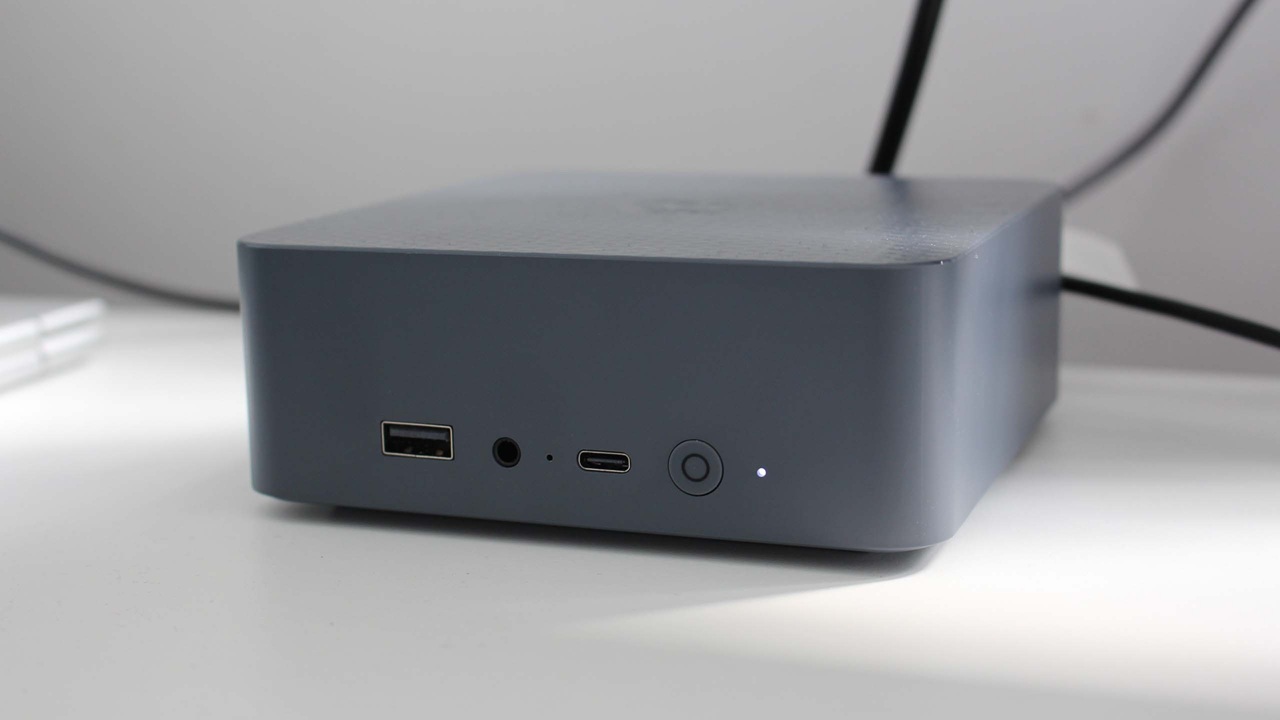
Walk into any electronics store or browse online in 2026, and you will notice something interesting. The giant tower PCs Read more

At AutoTechXpert.in, we're passionate about all things automotive—from the latest car launches and cutting-edge EV tech to in-depth reviews and performance insights. Our editorial team is made up of seasoned auto journalists, tech enthusiasts, and driving purists who live and breathe the road. With years of industry experience, we break down complex car jargon into real, relatable advice to help you make smarter automotive decisions.