
Walk into any electronics store or scroll through your favorite tech site, and you will see familiar names powering almost everything. Intel and AMD dominate desktops and laptops. ARM quietly runs the world inside smartphones, tablets, and an increasing number of servers. For decades, these architectures have shaped how computing works.
But something different is happening now. A quiet but powerful movement is growing behind the scenes. It is called RISC V, and unlike its competitors, it is not owned by a single company. It is open. Anyone can use it, modify it, and build on it.
That single idea is starting to change the rules of the game.
The question is no longer whether RISC V matters. The real question is whether it can genuinely compete with giants like ARM and x86, and possibly reshape the future of computing itself.
What Exactly Is RISC V and Why It Matters

To understand why people are excited about RISC V, it helps to strip things down to basics.
Every processor follows a set of instructions. These instructions tell the hardware what to do. This is called an instruction set architecture or ISA. ARM and x86 are proprietary ISAs. That means companies must pay licensing fees or follow strict rules to build chips using them.
RISC V is different. It is an open standard ISA. No royalties. No licensing barriers. Anyone from a startup to a global tech giant can design their own processor based on RISC V.
That freedom is powerful.
Think of it like the difference between closed software and open source software. Just as Linux changed the server world, RISC V has the potential to disrupt hardware in a similar way.
For developers and companies, this means more control. For innovation, it means fewer bottlenecks. And for the industry, it opens doors that were previously locked.
The Current Landscape Dominated by ARM and x86
Before jumping into the future, it is important to understand how strong the current players are.
x86 has been the backbone of personal computing for years. Intel and AMD have refined it through decades of engineering. It is powerful, reliable, and deeply integrated into software ecosystems.
ARM, on the other hand, has become the king of efficiency. It powers nearly every smartphone and is rapidly expanding into laptops, data centers, and even automotive systems. Apple’s transition to ARM based chips showed just how efficient and powerful this architecture can be.
Both ecosystems are mature. They have vast developer support, optimized software, and established manufacturing pipelines. This is not something a newcomer can easily challenge.
And yet, RISC V is trying.
Why Companies Are Betting on RISC V
The growing interest in RISC V is not just hype. There are clear reasons why companies are investing time and money into it.
First, cost matters. Licensing ARM cores or designing around proprietary architectures can be expensive. For startups or companies working on low margin devices, these costs add up quickly. RISC V removes that barrier.
Second, customization is a major advantage. With RISC V, companies can tailor processors for specific tasks. Whether it is AI workloads, edge computing, or IoT devices, they can design exactly what they need instead of adapting to a fixed architecture.
Third, geopolitical factors are playing a role. Countries and organizations are looking for more control over their technology stacks. An open architecture reduces dependency on foreign companies and licensing agreements.
Finally, innovation thrives in open ecosystems. When more people can experiment, more ideas emerge. This is exactly what is happening with RISC V right now.
Where RISC V Is Already Making an Impact
RISC V is not just a future concept. It is already being used in real products.
In the world of embedded systems and IoT, RISC V is gaining traction quickly. These devices often require low power and highly specialized chips, making RISC V an ideal fit.
Microcontrollers based on RISC V are now widely available and are being used in everything from smart home devices to industrial equipment.
The data center space is also starting to take notice. While RISC V is not yet a direct competitor to high end x86 or ARM servers, companies are experimenting with it for specific workloads, especially where customization can lead to efficiency gains.
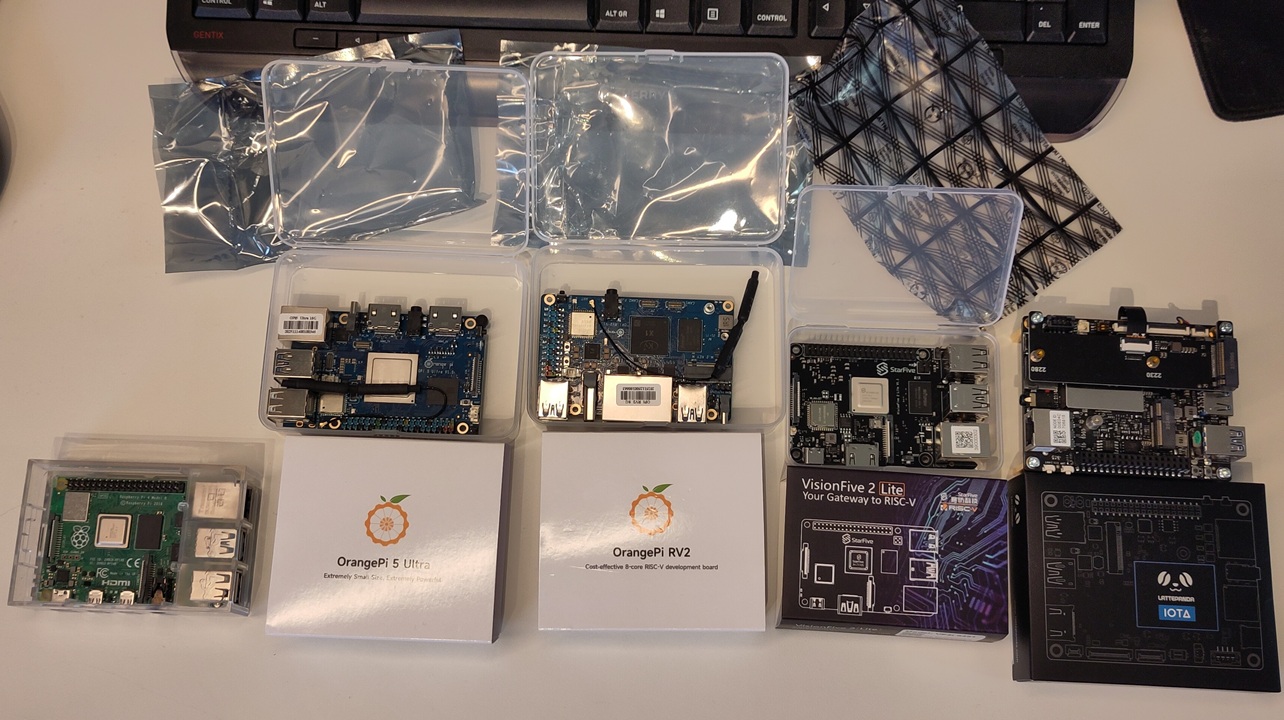
Even consumer electronics are beginning to explore RISC V. Some laptops and development boards powered by RISC V processors have already entered the market, giving developers a chance to build and test software on this architecture.
The Performance Question Can RISC V Keep Up
One of the biggest concerns people have is performance.
Can RISC V really match the speed and efficiency of ARM or x86?
The honest answer is that it depends.
At the high end, ARM and x86 still have a clear advantage. They benefit from decades of optimization, advanced manufacturing processes, and massive research investments.
RISC V is still catching up in this area.
However, the gap is closing faster than many expected. New RISC V cores are showing impressive performance improvements, especially in specialized applications. Companies are designing high performance implementations that challenge the idea that open architectures must be slower.
It is also worth noting that performance is not just about raw speed. Efficiency, flexibility, and cost play a big role in real world scenarios. In many cases, a well designed RISC V chip can outperform competitors for specific tasks.
Software Ecosystem The Real Battlefield
Hardware is only half the story. Software support is where real competition happens.
x86 and ARM have massive ecosystems. Operating systems, compilers, applications, and developer tools are all optimized for these architectures.
RISC V is still building its ecosystem.
That said, progress has been impressive. Linux support for RISC V has matured significantly. Major programming languages and tools are adding compatibility. Developers are actively contributing to open source projects that support the architecture.
But there are still challenges.
Many commercial applications are not yet optimized for RISC V. Some software simply does not run on it without modifications. This limits adoption, especially in consumer markets where users expect everything to work out of the box.
Over time, this gap is likely to shrink, but it remains one of the biggest hurdles for RISC V today.
The Role of Big Tech and Startups
One of the most interesting aspects of the RISC V movement is the mix of players involved.
Startups are embracing it because it lowers the barrier to entry. They can design chips without paying high licensing fees, allowing them to innovate faster.
At the same time, major tech companies are also exploring RISC V. Some are using it internally for specific applications, while others are investing in its ecosystem.
This combination creates a unique dynamic. Startups bring agility and fresh ideas, while large companies bring resources and scale.
Together, they are accelerating the growth of RISC V in ways that would have been hard to imagine a few years ago.
Challenges That Cannot Be Ignored
Despite all the excitement, RISC V is not guaranteed to succeed.
There are real challenges that need to be addressed.
Fragmentation is one of them. Because RISC V allows so much customization, there is a risk that different implementations become incompatible with each other. This can make software development more complex.
Another challenge is manufacturing. Designing a chip is one thing. Producing it at scale with cutting edge technology is another. Companies still rely on advanced fabrication facilities, which are dominated by a few global players.
Trust and reliability also matter. Enterprises and consumers need confidence that RISC V based systems are secure, stable, and supported in the long term.
These are not small obstacles, and overcoming them will take time.
The Future Outlook A Slow Burn or Sudden Shift
So, can RISC V challenge ARM and x86?
The most realistic answer is that it will not happen overnight.
This is more of a gradual shift than a sudden disruption.
In the short term, RISC V will continue to grow in areas where it already has an advantage, such as embedded systems, IoT, and specialized computing.
In the medium term, we will likely see it expand into more mainstream applications, including laptops, edge servers, and possibly some consumer devices.
In the long term, if the ecosystem matures and performance continues to improve, RISC V could become a serious competitor across multiple segments.
It may not replace ARM or x86 entirely, but it does not have to. Even capturing a significant portion of the market would be a major achievement.
A Human Perspective Why This Shift Feels Different
If you have followed tech for a while, you might feel something familiar here.
There was a time when open source software was seen as a niche idea. Today, it powers much of the internet. From servers to smartphones, open ecosystems have proven their value.
RISC V feels like a similar moment for hardware.
There is something compelling about the idea that anyone can contribute to the foundation of computing. It makes the industry feel more accessible, more innovative, and in some ways, more human.
Developers experimenting in small labs, startups building niche solutions, and large companies exploring new possibilities all share the same platform.
That kind of collaboration is hard to ignore.
Final Thoughts
RISC V is not just another chip architecture. It represents a shift in how we think about hardware.
ARM and x86 are not going anywhere anytime soon. They are too established and too powerful to be replaced quickly.
But RISC V does not need to replace them to matter.
Its strength lies in offering an alternative. A flexible, open, and evolving option that challenges the status quo.
As the ecosystem grows and technology advances, the competition will only become more interesting.
And for anyone who cares about the future of computing, that is a good thing.

Walk into any office, college lab, gaming café, or even a small home setup, and chances are high you will Read more
Walk into any electronics store today and you will see rows of sleek laptops and compact desktops that look impressive Read more
Quantum computing has been “just a few years away” for what feels like decades. Yet, if you look closely at Read more
If you have upgraded a laptop or built a PC anytime in the last few years, you have probably noticed Read more

At AutoTechXpert.in, we're passionate about all things automotive—from the latest car launches and cutting-edge EV tech to in-depth reviews and performance insights. Our editorial team is made up of seasoned auto journalists, tech enthusiasts, and driving purists who live and breathe the road. With years of industry experience, we break down complex car jargon into real, relatable advice to help you make smarter automotive decisions.