

A few years ago, artificial intelligence felt like a helpful assistant. Today, it feels more like a co worker that never sleeps. AI agents are no longer limited to answering questions or generating text. They can plan tasks, execute workflows, make decisions, and even improve themselves over time. That shift has sparked a serious question across industries. Are we witnessing the beginning of large scale job replacement?
From software developers writing code to marketers running campaigns and even CEOs making strategic decisions, no role seems completely untouched. Yet the reality is more nuanced than simple replacement. What we are seeing is not just disruption but a complete reshaping of how work gets done.
Let us take a closer look at what AI agents really are, how they are changing key roles, and whether humans are truly at risk of being replaced.
What Exactly Are AI Agents?
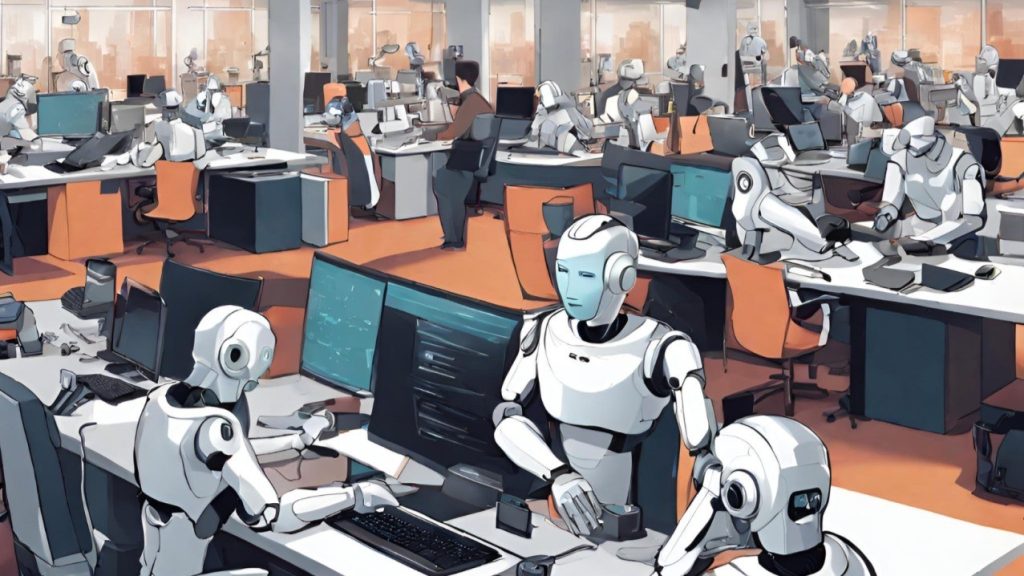
AI agents are systems designed to perform tasks autonomously with minimal human input. Unlike traditional tools that wait for instructions, these agents can analyze goals, break them into steps, and execute them independently.
For example, an AI agent can:
- Research a topic
- Write content
- Edit and optimize it
- Publish it online
- Track its performance
All without constant supervision.
This ability to act, adapt, and learn makes AI agents far more powerful than earlier forms of automation. They are not just tools. They are becoming participants in workflows.
Why AI Agents Feel Different This Time
Automation is not new. Machines replaced manual labor long ago. Software replaced repetitive office tasks. But AI agents are targeting something deeper. They are entering creative, analytical, and leadership spaces.
There are three reasons why this feels different:
First, they are getting better at understanding context. AI agents can now interpret human intent rather than just follow commands.
Second, they operate at incredible speed. What takes a human hours can often be done in minutes.
Third, they are scalable. A single person can deploy multiple AI agents to handle work that once required an entire team.
This combination is what makes people wonder if entire professions are at risk.
Are Software Developers Being Replaced?
At first glance, developers seem especially vulnerable. AI tools can already write code, debug errors, and even build simple applications.
But the reality inside development teams tells a different story.
AI is changing how developers work, not eliminating the need for them. Tasks like writing boilerplate code or fixing basic bugs are increasingly handled by AI. This frees developers to focus on architecture, problem solving, and innovation.
A junior developer today might rely heavily on AI assistance. A senior developer, however, uses it as a productivity multiplier. The role shifts from writing every line of code to guiding systems and making critical decisions.
There is also a trust factor. Businesses still need humans to verify, secure, and optimize AI generated code. One mistake in logic or security can have serious consequences.
So while the number of traditional coding tasks may decrease, the demand for skilled developers who can manage and direct AI systems is likely to grow.
What About Marketers?
Marketing has already seen major disruption from AI. Content creation, ad copy, keyword research, and analytics are now heavily influenced by intelligent systems.
AI agents can:
- Generate blog posts and social media content
- Analyze audience behavior
- Optimize campaigns in real time
- Personalize messaging at scale
For many businesses, this means fewer repetitive marketing tasks. But it does not mean marketers are becoming obsolete.
Human creativity, emotional intelligence, and brand storytelling still play a central role. AI can generate content, but it often lacks the deeper understanding of culture, trends, and human psychology that drives truly impactful campaigns.
The role of a marketer is evolving into something more strategic. Instead of manually creating everything, marketers are becoming orchestrators who guide AI tools, refine messaging, and ensure consistency.
In simple terms, AI handles execution while humans focus on direction.
Can AI Replace CEOs and Leadership Roles?
This is where the conversation becomes more complex.
AI agents can already analyze data, forecast trends, and suggest business strategies. In theory, they could support or even influence high level decision making.
However, leadership is not just about data.
A CEO must navigate uncertainty, manage people, build relationships, and make decisions that involve ethics, risk, and long term vision. These are areas where human judgment remains critical.
AI can provide insights, but it cannot fully understand the human consequences behind decisions. For example, restructuring a company is not just a financial move. It affects lives, culture, and morale.
That said, AI is becoming a powerful advisor. Leaders who ignore it risk falling behind. Those who embrace it gain a significant advantage.
In the future, the most effective CEOs may not be replaced by AI, but they will rely on it heavily.
Jobs Most at Risk from AI Agents
Not all roles are affected equally. Jobs that involve repetitive, predictable tasks are more likely to be automated.
These include:
- Data entry and basic administrative work
- Customer support roles with standard responses
- Entry level content generation
- Simple coding and testing tasks
In these areas, AI agents can perform faster, cheaper, and with fewer errors.
However, roles that require creativity, complex problem solving, and human interaction are more resilient.
The Rise of Hybrid Roles
One of the most interesting outcomes of AI adoption is the emergence of hybrid roles.
Instead of replacing humans, AI is creating new types of jobs. For example:
- AI workflow managers
- Prompt engineers and AI trainers
- Automation specialists
- Human AI collaboration experts
These roles did not exist a few years ago. They reflect a shift in how work is structured.
A marketer today might need to understand AI tools. A developer might need to manage automated systems. A business leader might need to interpret AI driven insights.
The boundaries between roles are becoming less rigid.
The Human Advantage Still Matters
Despite rapid advancements, AI still has limitations.
It struggles with:
- Deep empathy and emotional understanding
- Ethical judgment in complex situations
- Original thinking beyond learned patterns
- Building trust and relationships
These human qualities remain essential in many professions.
For example, a customer might appreciate a quick AI generated response. But in a sensitive situation, they often prefer speaking to a real person who understands their concerns.
Similarly, businesses rely on trust and reputation. Human involvement adds credibility and accountability.
How to Stay Relevant in the Age of AI
Instead of asking whether AI will replace jobs, a more practical question is how to adapt.
Here are a few ways individuals can stay competitive:
Learn how to use AI tools effectively. Understanding how to work with AI is becoming a basic skill across industries.
Focus on skills that AI cannot easily replicate. This includes creativity, communication, and strategic thinking.
Stay updated with industry trends. AI is evolving quickly, and staying informed helps you remain relevant.
Build a personal edge. Whether it is unique expertise or a strong personal brand, differentiation matters more than ever.
A Real World Perspective
Consider a small business owner who once managed everything manually. Today, they can use AI agents to handle customer support, marketing campaigns, and data analysis.
This does not eliminate their role. Instead, it allows them to focus on growth, partnerships, and long term planning.
Similarly, a developer who embraces AI can complete projects faster and take on more complex challenges. A marketer who understands AI can deliver better results with fewer resources.
The pattern is clear. AI amplifies human capability rather than simply replacing it.
The Future of Work with AI Agents
Looking ahead, workplaces will likely become more collaborative between humans and AI.
Teams may consist of both people and AI agents working together. Decision making will be supported by data driven insights. Workflows will become faster and more efficient.
However, this also raises important questions about ethics, job distribution, and economic impact. Governments and organizations will need to address these challenges carefully.
The transition may not be smooth for everyone. Some roles will disappear. Others will evolve. New ones will emerge.
Final Thoughts
AI agents are not just another technological trend. They represent a fundamental shift in how work is done.
Will they replace software developers, marketers, and CEOs? Not entirely.
But they will change these roles in ways that are impossible to ignore.
The future belongs to those who adapt. Those who learn to work alongside AI will find new opportunities. Those who resist may find themselves left behind.
In the end, it is not a battle between humans and machines. It is a collaboration. And the outcome depends on how we choose to use this powerful technology.

Running a small business often feels like a constant race against time. There are emails to answer, customers to manage, Read more

Artificial intelligence has quickly moved from being a futuristic concept to something we interact with every day. It recommends what Read more
A few years ago, most people saw artificial intelligence as something limited to chatbots, voice assistants, or recommendation systems. Then Read more
A few years ago, talking about machines replacing jobs felt like a distant possibility. Today, it feels personal. From customer Read more

At AutoTechXpert.in, we're passionate about all things automotive—from the latest car launches and cutting-edge EV tech to in-depth reviews and performance insights. Our editorial team is made up of seasoned auto journalists, tech enthusiasts, and driving purists who live and breathe the road. With years of industry experience, we break down complex car jargon into real, relatable advice to help you make smarter automotive decisions.