
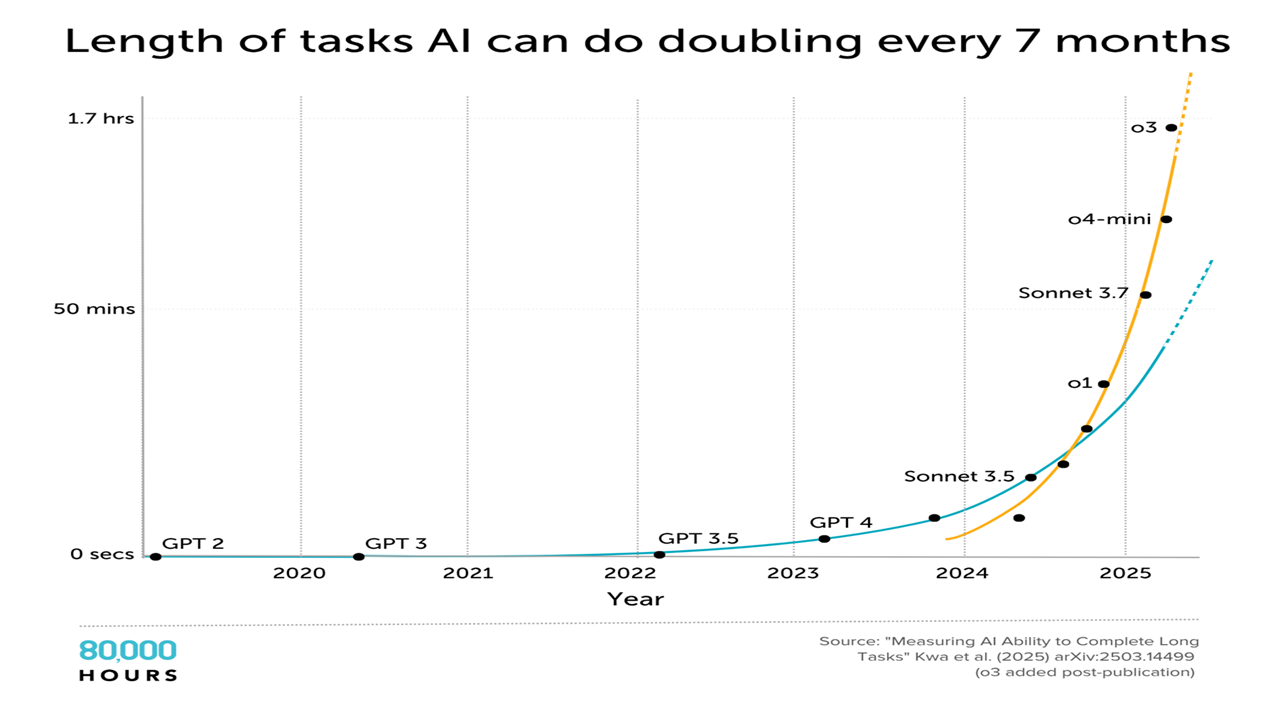
A few years ago, most people saw artificial intelligence as something limited to chatbots, voice assistants, or recommendation systems. Then tools like ChatGPT changed everything. Suddenly, millions of people were interacting with AI daily, asking it to write emails, solve coding problems, and even help with life decisions.
Now the conversation has shifted. The big question is no longer what AI can do today. It is about what comes next. Specifically, how close we are to Artificial General Intelligence or AGI.
AGI refers to a level of intelligence where machines can think, learn, and adapt across a wide range of tasks, much like a human. It is not just about answering questions. It is about understanding, reasoning, and improving over time without needing constant retraining.
The idea sounds exciting, but also a bit uncertain. Many predictions have been overly optimistic in the past. That is why this article focuses on a realistic timeline between 2027 and 2030, grounded in current trends, research progress, and industry signals.
What We Mean by AGI in Simple Terms

Before jumping into timelines, it helps to clarify what AGI actually means in practical terms.
AGI is not just a smarter chatbot. It is a system that can perform any intellectual task a human can do, often at a comparable or even higher level. That includes learning new skills quickly, understanding context deeply, and applying knowledge across different domains.
For example, an AGI system could write a research paper in the morning, debug a complex software system in the afternoon, and design a business strategy in the evening without needing separate models for each task.
Right now, tools like ChatGPT are impressive but still narrow in important ways. They rely on training data and patterns rather than true understanding. They can make mistakes, hallucinate information, and struggle with long term reasoning.
AGI aims to close that gap.
Where We Are Today With ChatGPT Level AI
As of now, AI systems have reached a stage where they can assist with a wide range of tasks. ChatGPT and similar models can generate high quality text, analyze data, and even create images or code.
However, they still have limitations that prevent them from being considered AGI.
First, they lack consistent reasoning. You might get a brilliant answer in one instance and a flawed one the next.
Second, they do not truly understand the world. They predict patterns based on data rather than forming real world models.
Third, they struggle with long term planning and memory. While improvements are being made, maintaining context over extended interactions remains a challenge.
Despite these limitations, progress is happening fast. Each new version feels more capable and closer to human like thinking.
Key Factors Driving Progress Toward AGI
The path from ChatGPT to AGI is not just about making models bigger. Several factors are working together to push the field forward.
1. Improved Model Architectures
Researchers are constantly experimenting with new designs that improve reasoning and efficiency. These changes can have a bigger impact than simply increasing model size.
2. Better Training Data
High quality and diverse data helps models learn more accurately. There is also a growing focus on curated datasets that improve reasoning and reduce errors.
3. Multimodal Capabilities
Modern AI systems can process text, images, audio, and video together. This brings them closer to how humans experience the world.
4. Memory and Personalization
Adding long term memory allows AI to remember past interactions and improve over time. This is a crucial step toward more human like intelligence.
5. Reinforcement Learning and Self Improvement
AI systems are getting better at learning from feedback and refining their own outputs. This creates a feedback loop that accelerates progress.
A Realistic Timeline From 2027 to 2030
Let us break down what the next few years might realistically look like based on current trends.
2027 The Rise of Highly Capable AI Assistants
By 2027, AI systems are likely to become deeply integrated into everyday workflows.
Instead of being just tools, they will act more like collaborators. You might rely on them for managing projects, writing detailed reports, or even making complex decisions.
These systems will have better memory and context awareness. They will remember your preferences, past conversations, and ongoing tasks.
However, they will still fall short of true AGI. You may still need to verify outputs and guide the system in complex situations.
2028 Early Signs of General Intelligence
Around 2028, we may start seeing systems that blur the line between narrow AI and general intelligence.
These models could handle a wide range of tasks without needing specific training for each one. They might show improved reasoning, better understanding of cause and effect, and stronger problem solving abilities.
For example, an AI could analyze a business problem, suggest strategies, simulate outcomes, and refine its recommendations based on feedback.
At this stage, many experts may begin debating whether AGI has effectively arrived in a limited form.
2029 Near AGI Capabilities
By 2029, AI systems could reach a level where they perform at or above human level in many intellectual tasks.
They may be able to learn new skills quickly, adapt to unfamiliar situations, and provide consistent, reliable outputs.
This is the point where industries start transforming rapidly. Education, healthcare, software development, and finance could all experience major shifts.
However, even at this stage, there may still be gaps. True human level understanding and consciousness remain difficult to define and measure.
2030 Practical AGI in Controlled Environments
By 2030, we may see what can be called practical AGI.
This does not mean a perfect, all knowing intelligence. Instead, it means systems that can handle most real world tasks at a human or near human level within controlled environments.
These systems could be used in research, business operations, and even governance support.
At the same time, safety and regulation will become critical. Governments and organizations will need to ensure that these powerful systems are used responsibly.
Challenges That Could Slow Down Progress
While the timeline sounds promising, it is important to stay realistic. Several challenges could delay the arrival of AGI.
Technical Limitations
Current models still struggle with reasoning, accuracy, and efficiency. Solving these issues is not trivial.
Data Constraints
High quality training data is becoming harder to obtain. There are also concerns about data privacy and copyright.
Safety and Alignment
Ensuring that AI systems act in ways that align with human values is a major challenge. This becomes even more important as systems grow more powerful.
Regulation and Ethics
Governments may introduce strict regulations that slow down development. While necessary, this could impact the pace of progress.
Real World Impact of AGI
If AGI becomes a reality between 2027 and 2030, the impact will be significant.
Work and Jobs
Many tasks will become automated, but new roles will also emerge. The focus may shift toward creativity, strategy, and human interaction.
Education
Learning could become more personalized and accessible. AI tutors might adapt to each student’s pace and style.
Healthcare
Doctors could use AGI systems for diagnosis, treatment planning, and research, leading to better outcomes.
Business and Innovation
Companies will be able to innovate faster, analyze data more effectively, and make smarter decisions.
A Human Perspective on the Future
It is easy to get caught up in predictions and timelines, but there is a more personal side to this story.
Think about how often you already use AI in your daily life. Maybe you ask it to write something, solve a problem, or explain a concept. Now imagine that same tool becoming more reliable, more thoughtful, and more capable over time.
The shift will not happen overnight. It will feel gradual, almost subtle at first. Then one day, you might realize that you rely on AI for things you never expected.
That is how technological change often works. It builds quietly until it becomes impossible to ignore.
Final Thoughts
The journey from ChatGPT to AGI is one of the most important technological transitions of our time.
While predictions vary, a realistic timeline between 2027 and 2030 suggests steady progress rather than sudden breakthroughs. Each year will bring improvements that move us closer to general intelligence.
At the same time, challenges around safety, ethics, and regulation will shape how this technology evolves.
The key is to stay informed, stay adaptable, and understand that AGI is not just a technical milestone. It is a shift that will influence how we work, learn, and live.
The future is not as far away as it once seemed.

Running a small business often feels like a constant race against time. There are emails to answer, customers to manage, Read more

Artificial intelligence has quickly moved from being a futuristic concept to something we interact with every day. It recommends what Read more

A few years ago, artificial intelligence felt like a helpful assistant. Today, it feels more like a co worker that Read more
A few years ago, talking about machines replacing jobs felt like a distant possibility. Today, it feels personal. From customer Read more

At AutoTechXpert.in, we're passionate about all things automotive—from the latest car launches and cutting-edge EV tech to in-depth reviews and performance insights. Our editorial team is made up of seasoned auto journalists, tech enthusiasts, and driving purists who live and breathe the road. With years of industry experience, we break down complex car jargon into real, relatable advice to help you make smarter automotive decisions.